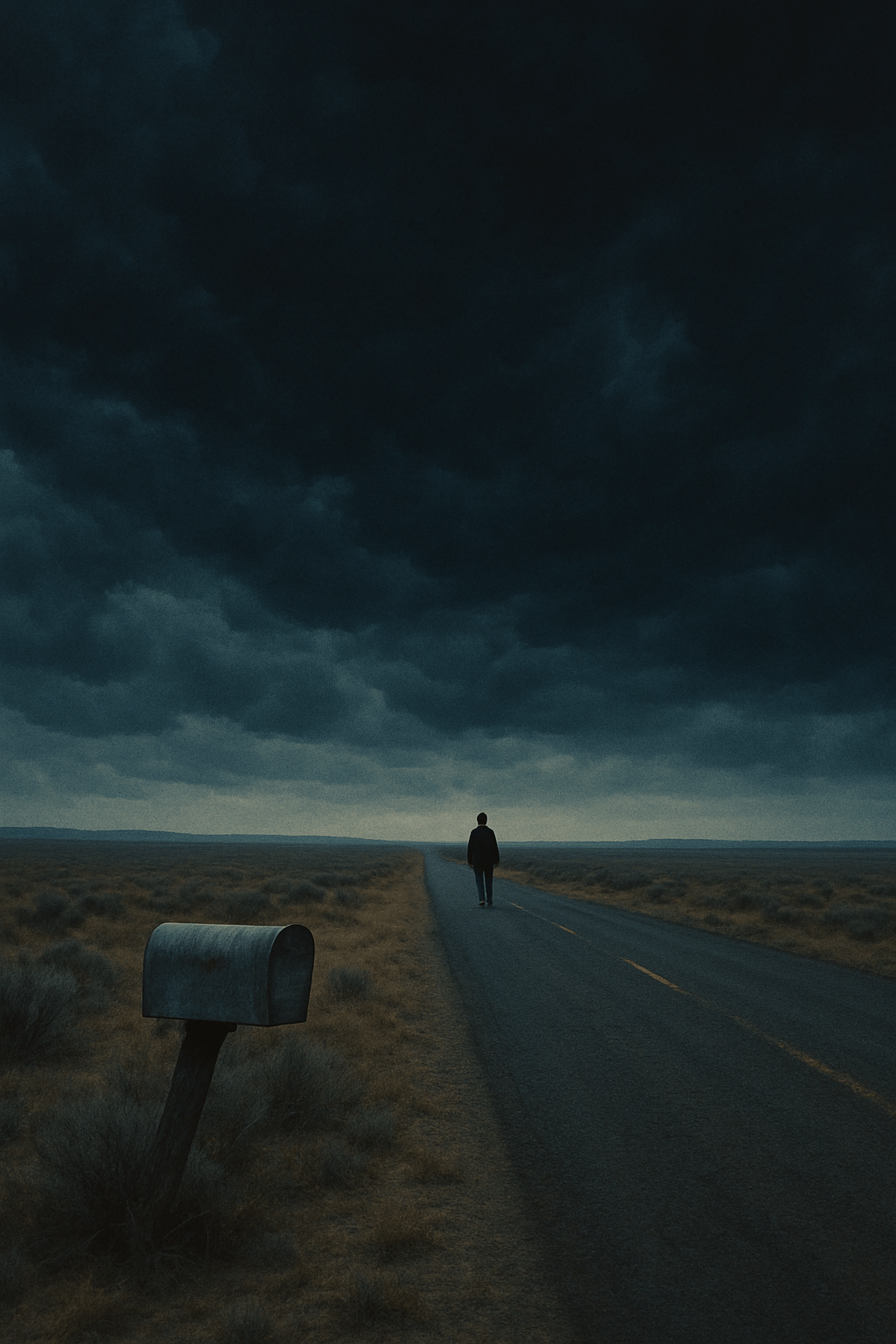
I’m a fifth-generation Wyomingite, currently stuck in Denver, CO tying up some family mess. It’s not permanent. I’ve got a lease on a 500 square foot hovel in Laramie, WY, not far from where my great-grandparents are buried. About 60 miles east, the town of Carpenter still carries my great-great-great grandpa’s name. I’m not coming back for nostalgia, and I’m sure as hell not coming back to write commentary. I’m coming back because roots mean something here and mine aren’t decorative. They’re a promise.
WyoFile, on the other hand, claims to be committed to Wyoming while publishing work that
feels anything but grounded. The high plains and mountains become a distant stage set. Less a place, more a metaphor. Its stories often frame locals as symbols in national debates, not as complex people rooted in hard soil. There’s a noticeable absence of lived
grit. No windburn, no well water, no small town quiet. Instead, it offers polished narratives that hover above the land they claim to represent.
One such curated essay, written by Vicki Lindner for WyoFile in August 2021, is titled “Political polarization is literally killing us.” In it, Lindner recounts a visit to Laramie where she encountered a young man who was unvaccinated against COVID-19. She writes
“I don’t think those like, ‘Bob’ … can begin to imagine the fury they create in the rest of us.”
The fury. The rest of us. How could native New Yorker Vicki, on a trip to see a concert that she ended up ditching anyway, understand what an entire population might feel. That language is designed to isolate and shame—not to understand or communicate. Even as a liberal leaning person, I bristle at this. The people she’s writing about are still my neighbors. I might not agree with them, but I know better than to talk AT them. Especially if I’ve left like her.
Lindner once had a cabin in Dubois, WY. She also lived, for a time, in Encampment, WY. And while that might lend someone a fondness for Wyoming, fondness does not equal fluency. These places, in her writing, become tokens of authenticity—proof she has earned
the right to translate the rest of us. But her writing depicts a Wild West cowboy culture
softened with nostalgia and sharpened into indictment when convenient.
That’s the core problem: too much of what WyoFile publishes under the banner of liberalism doesn’t read as Wyoming liberalism at all. It reads like a coastal proxy war—one where the complexity of rural life is flattened into “backward” or “oppressed.” If you’re
looking for progressive voices from inside the state, they’re out here,but you won’t often
find them quoted or published. Instead, we get the moral high ground from 5280.
I know this firsthand. A long time ago, Lindner expressed interest in my story. At the time, I had just left Gillette, WY and was recovering from a difficult chapter in my life involving addiction. She never wrote the piece. But it quickly became clear that what interested her was not the truth of my recovery, nor the ways I had navigated family trauma, grief, and healing. What interested her was the symbolism: a person damaged by fossil fuel culture. A metaphor she could use.
And when I didn’t serve that narrative, she moved on. That’s not journalism. That’s not advocacy. That’s extraction. This is what people get wrong about liberalism in Wyoming: it isn’t performative. It isn’t
loud. It doesn’t wear the same cultural costume you might find in Boulder or Brooklyn.
It’s shaped by a different set of values entirely. Quiet perseverance, lived humility, a sense of obligation to community that isn’t transactional. It’s forged in places where no one’s filming for Instagram. Where you might dig the same truck out of the same snowbank, no matter what bumper sticker is on the back.
I don’t speak for all Wyoming liberals. But I know I’m not alone in feeling this way. I’ve spent over a decade in the field of mental health. I’ve stayed in this work even as family members died, as the systems around me failed, as I tried—without funding or support—to offer meaningful care.
That’s what commitment looks like. It’s not romantic. And it’s not useful to
people like Lindner, who write memoirs about Wyoming and call them movements.
WyoFile, at its best, could be a platform for hard questions and local insight. But lately, it feels more like a filter—a place where stories are polished to match a worldview, not
presented in their raw, necessary complexity. There’s too much signaling. Not enough listening.
If you want to support Wyoming liberalism, you have to respect how it looks and sounds here—not how it scans from elsewhere. That means acknowledging the people who never left, who kept working, who are trying to change systems without scorning everyone in
them. It means telling stories that don’t flatten us into metaphors for your politics.
We don’t need more writing from a safe distance. We need people who know the wind, carry the silence, and stay when the story stops being useful. That’s the kind of voice Wyoming deserves—and the one you keep missing
 the misfit west
Leave a comment