A client says she feels empty, and before she gets to the end of the sentence the manual is open in my head. I used to carry the real one into the room and flip to the page with her sitting right there. Now I follow the story closely, sorting what is cultural from what is pathological, and the words from the diagnosis start to pop up on their own. “He was the best thing to ever happen to me.” “The world is a dangerous place.” I know that page because someone once turned to it for me.
Listening, I walk through the rooms of a client’s life. The suicide of a friend. An estrangement. Divorce. Children who won’t get off their phones and children who won’t get on the phone. Sometimes a cue in somebody else’s room sends me wandering through my own, and I come back to the face in front of me wondering how long I have been gone and whether I’ve caused a rupture. The client keeps talking. I return to the safety of a diagnosis, where everything has a name. Mine has one too. Somewhere between the second counselor and the fifth, someone wrote antisocial personality disorder in my file, and I have been trying to figure out who ever since.
During my first stint in treatment there was in-fighting among the drug court admin, so we were tossed around five different providers. Some contracted. One guy would ride his bike around, the light brown of his khakis wrapped with a leg band to keep his fancy pants from his bike chain. He was smug and defensive and he didn’t last but a few weeks. We called him Ed 209, after the hulking droid in RoboCop that heard “drop your weapon,” watched the man do it, and shot him anyway. Ed 209, the enforcer, shot his own damn self in the foot and was gone as quick as the rest of them.
Then there was the woman we called “Debbie Does Counseling,” who had us doing arts and crafts in a downtown building, completely unaware that half the participants were huffing air duster at break. Slurred words and rocking chairs falling all the way back; it wasn’t much of a difference from their normal behavior, so I might not have noticed either. She directed us to make masks with two sides: what we show the world and what we hide. Well, Debbie, forgive us if we can’t really get into an exercise that mocks the fact we can’t piss without it being tested. We can’t hide from the world.
Then there was Michelle, just another counselor in the rotation, who built every group around her handful of favorites. And then Theresa, the ex-wife of the drug court judge, who would cross her legs in a provocative way during group therapy, my brain racing back to Sharon Stone in Basic Instinct. Sharon, playing Catherine, who famously makes the detectives sweat, in a scene on millions of VHS tapes being rewound, paused, rewound to get a shot of Sharon snatch. The flirtations confused me, and so did the boys denying they’d been huffing, one making me guess if I saw what I saw and the other if I smelled what I smelled. The whole thing was disorienting as hell and probably on purpose.
I can’t be sure which one of them gave me the scarlet diagnosis, but it still bothers me. It came after I called Debbie fat (I said the pants don’t make her look fat, the fat makes her look fat, and BAM, new counselor again), told Michelle her groups were agonizing, made comments about Michelle’s face melting off, and called the drug court assistant “Troll” in passing, so I understand why the team wanted to label me. The difference was Theresa could close her legs, Debbie could get some confidence, Michelle could back off her favorites, and the Troll could have been nice. But none of them were court ordered to do so.
Antisocial personality disorder, allegedly, and a plea to the court to reinstate my underlying sentence, which was still a misdemeanor. Only by the skin of my yellow county teeth, because as I moved through the phases of drug court the law stretched its lookback from five years to ten, which put all three of my DUIs in one frame, and the push for my prison sentence became more real. You can’t breathe wrong in drug court, much less antagonize every last provider, because at some point it does start to read like anti-something, and if anything, anti-women.
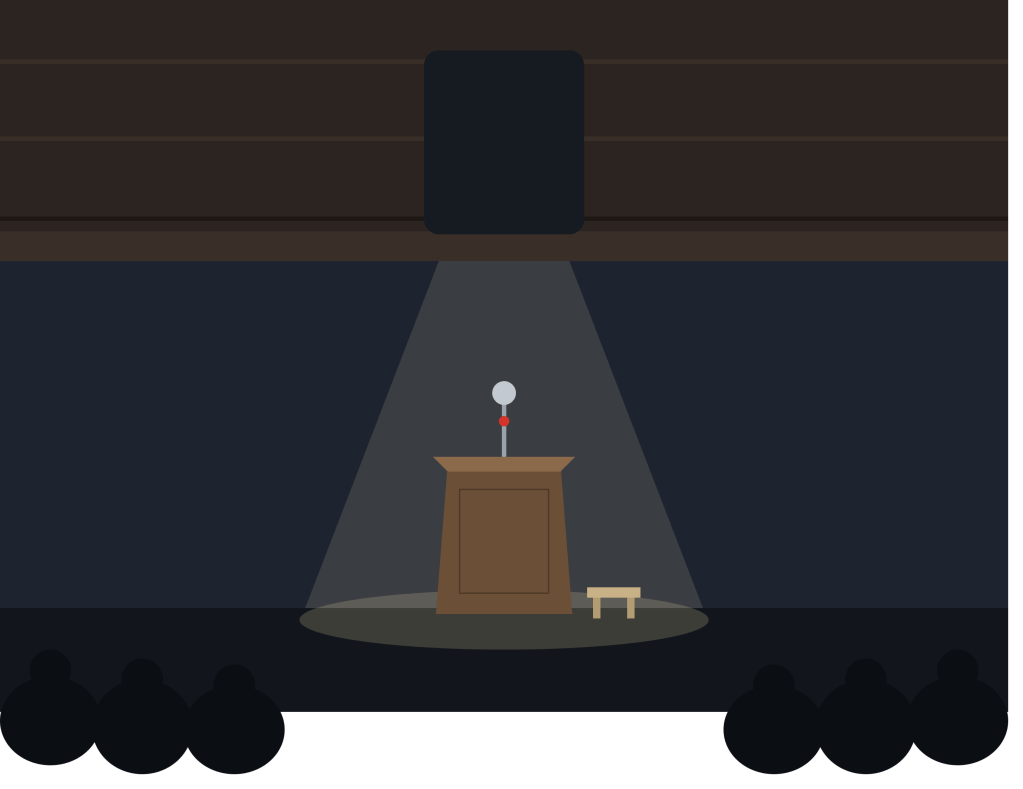
So I apologized in court. I stood at the podium with a room full of men taking sick pleasure in it, the judge yelling at me and no one else, and what I felt was shame and embarrassment. I said I was sorry the way an overgrown five-year-old apologizes for a mess she doesn’t even remember, because sorry was what kept me out of jail. I did whatever penance was assigned to me that week, and then magically the personality disorder melted away, which a personality disorder is not supposed to do, since the manual calls it an enduring pattern, and I graduated from drug court less than a year later with my uncle as witness.
The DSM wants three of seven before it will consider the diagnosis. One, a failure to conform to lawful behavior, shown by repeatedly doing things that are grounds for arrest. Two, deceitfulness, the lying and aliases and conning for profit or pleasure. Three, impulsivity or failure to plan ahead. Four, irritability and aggression, the repeated fights. Five, reckless disregard for the safety of self or others. Six, consistent irresponsibility, a person who can’t sustain work or honor a debt. Seven, lack of remorse, an indifference to or rationalizing of having hurt, mistreated, or stolen from someone. A clinician reads that list the way I read a client’s life, one door at a time, checking what is behind each.
I can see how a team might count three. I kept failing my UAs, I lied about them so I wouldn’t spend the weekend in jail, and I enrolled in the spring semester and used meth anyway, which reads as impulsivity on paper. But I have been behind those doors. A failed UA is substance use disorder at its finest, and the lying lasted exactly as long as the testing did. The manual also wants signs of conduct disorder before the age of fifteen, and nobody ever told me I had it. The file had room for all of that, and for Troll and the pants. It had no room for the English degree with Honors on my transcript, or the job, or the fact that I had never been in a physical fight in my life.
The point of hanging such a heavy word on me was to have grounds to incarcerate me again, and they were willing to rewrite the rules of drug court to do it, charging me inside the program for calling one counselor fat and another useless. Irritability shares a ton of diagnoses, and what bothers me is that nobody assessed their way to the obvious one: polysubstance use disorder and a person who didn’t get along with anyone. Hindsight is 20/20, but if I sat in a room with me now, what I would sniff out is trauma. Plain old trauma from the violent death of my father, which was recent then. Nobody opened that door. I eventually landed in the hands of a much more competent provider, who inspired me to become a therapist.
Now a client tells me she feels empty, and the manual opens in my head the way it always does. I can tell substance use from conduct disorder from grief by what she does when I ask about the worst year, and I have learned to let the page stay open and the person stay in front of me. Somewhere there is a file with a word in it that was never supposed to come off, and a transcript in a different drawer that says English, Honors, and the two have never met. I ask what happened, and when, and who died. Then I stay in my chair and wait for her to find the date.