Category: grief and loss

  • as for me and my house

    The Oriental Trading catalog comes in the mail with Dad’s stack of Wall Street Journals and by the next morning it’s on the back of the toilet, pages curling from the shower. Temu before Temu. Everything in it comes in bulk. Twenty-four plastic leis for five ninety-nine, a gross of rubber frogs, grass table skirts by the dozen, sticker sheets in quantities nobody on this earth could use, printed for people who have that many people.

    The good issues I take back to my room and go through at night with a ballpoint. Tiki torches. Coconut cups with the bendy straws. Paper lanterns strung on wire. A piñata shaped like a parrot. The order form in the back has twelve blank lines for item number, color, quantity, and I fill in all twelve and never tear it out.

    The party is at dusk on our deck with the torches going down both sides and the parrot hanging off the gutter and the coconuts getting refilled and nobody going home. It never rains on it. Nothing tips over. I have this party in the bathroom, in my bed, out in the dry crusty field behind the house where I’m sure a rattlesnake is waiting for my ankle, and it is a daydream, a wish, a want, a prayer.

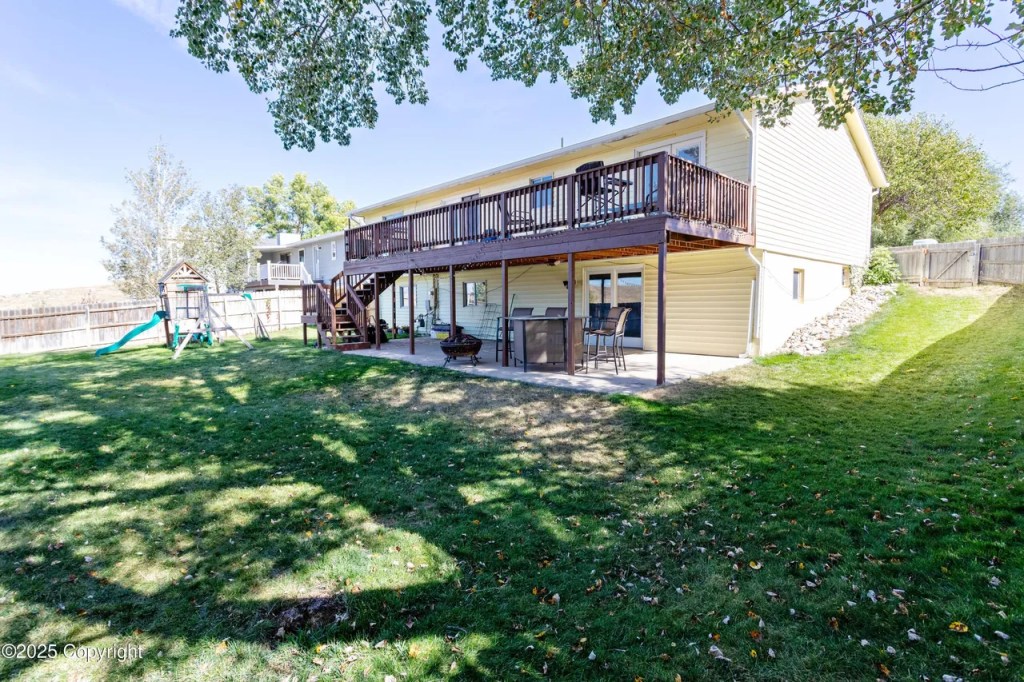
    The real deck is where Dad comes out after a twelve hour shift, boots off, and throws Frisbees for the dogs before he’s had dinner. The wind comes across the yard with nothing to slow it down and a tiki torch out there would last about as long as a match. Mom and Dad don’t have people over.

    In my room the sock drawer is the washer and the drawer under it is the dryer, and I draw burners on gray paper with a red marker so I can brown ground beef the way I watch her do it, and I cook for the dolls, and I set the table, and everybody eats.

    The one night anybody comes is Dad’s reunion, and while they’re all inside I back the Comanche into his friend’s car and put the taillight across the gravel in red plastic pieces. I pull forward, kick what I can find under the tire, and go sit at the kitchen table and wait for it. When the two of them come out with their beers they stand there looking at the bumper a long time, and then they start laughing, both of them, and Dad puts his hand flat on his friend’s shoulder and leaves it there. Nobody comes in to get me. I sit on the back step in the dark way past when I should be in bed listening to a sound I can’t place at first because I haven’t heard it much.

    The rest of the summer the phone hangs on the kitchen wall and Mom waits for it. Oil on her legs at the counter while she waits, smelling like Jovan musk. When the call comes we load up and drive out to the park at Foothills and she walks the loop with the other mothers, three times, four times around, while we’re all turned loose. Bible school in June with the paper crowns. Wednesday nights with the verses. The Christian bookstore with the cassettes and the devotionals and a wall of figurines with their big wet eyes. Mountain Dew runs to the Kum and Go, fountain and bottle both, and if we’d done something wrong that day we went for free. The calendar on the refrigerator is filled in through August in her small handwriting, and for two people who don’t have any friends, my parents are forever keeping track of what’s popular.

    The knocker on our door says AS FOR ME AND MY HOUSE, WE WILL SERVE THE LORD. Over the stove there’s GIVE US THIS DAY OUR DAILY BREAD in cross-stitch with the glass gone soft from the grease. There’s a fish on the back of the van. I learn the verses cold, I could say them in my sleep, and I do sometimes.

    At youth group I say out loud that we don’t seem very on fire for God, and the pastor waits until after and walks me down to the hallway by the coat hooks and talks to me quiet enough that not one person turns around. That night the catalog is right where I left it, swollen from the steam, and I open it to the luau pages and start circling.

    I have a dining table now. Before this I had a room at the Lariat with a mini fridge and a dog, so I want to be clear about what a table is. There are platters in the top cabinet I’ve never taken down, a folding table still in its plastic in the garage, a box of string lights, a case of mason jars I bought for a reason I could explain to you if you asked me to.

    The catalog still comes. Not to that house, that house sold, but here, with my name on it and a customer number I never gave anybody. Same parrot piñata. Same grass skirts by the dozen. They’ve added a cotton candy machine that does forty and a whole separate edition called Fun & Faith.

    Berkshire Hathaway bought the company in 2012. Dad read the Wall Street Journal every day of his life, stacks of them in the spare room, cups and handles and W’s, hours in the green chair working out where the money was going, and he never made a dime. The one thing Buffett wanted was sitting on the back of our toilet the entire time.

    I want to open a Pilates studio. I have never said that out loud to anybody who could do anything about it, but I can see it better than the room I’m sitting in. Morning light, mirrors on the long wall, rubber floor. Reformers down both sides with the springs color coded, red and blue and yellow, and the sound of a room full of them is the best sound I know: the click of a spring going on, the carriage running out and coming back, forty pounds of somebody’s body moving on a track and not making much noise about it. Water bottles sweating on the sill. Everybody’s shoes in a pile by the door because nobody wears shoes in there. Reformers run four thousand apiece and the company that sells them mails a catalog too.

    Ten reformers. That’s what fits.

    The roster is on a clipboard by the door with the date at the top and ten lines under it, first name and last, and there’s a pen on a string so nobody walks off with it.

    I start at the top.
  • one for sorrow

    When I was younger, I used to keep a running list of questions in my head that I wanted to ask God. I think my parents had started that trend: if I asked something one of them couldn’t answer, they would direct me to God. Pretty sneaky on their part, because then I had to be sure to get to heaven, and I would try to perform all the tasks that I thought would get me to heaven, storing every last treasure in a memory cache.

    One of the questions was where carrot seeds come from. Another one was where birds sleep. And then, I had a more complicated question that I had tucked away for church camp, where I could hopefully find an answer. Earlier that year, my dad had brought us to McDonald’s and let us each get a combo meal, and I knew something was very, very wrong, because generally we were only allowed two hamburgers and one fry.

    Our brother had gone on a stealing spree. He had broken into car after car in Gillette stealing car stereos (had to have been like ’94, so verrrrrry beginning of CDs and things), Gameboys, whatever anyone had left in their vehicle, while he and a buddy ran the loot home, and I messed up the whole thing telling Mom I had beat Gameboy. The allure of the McDonald’s combo went away quickly when Dad hissed “What the fuck were you thinking?!” and we were all at attention. Dad didn’t cuss.

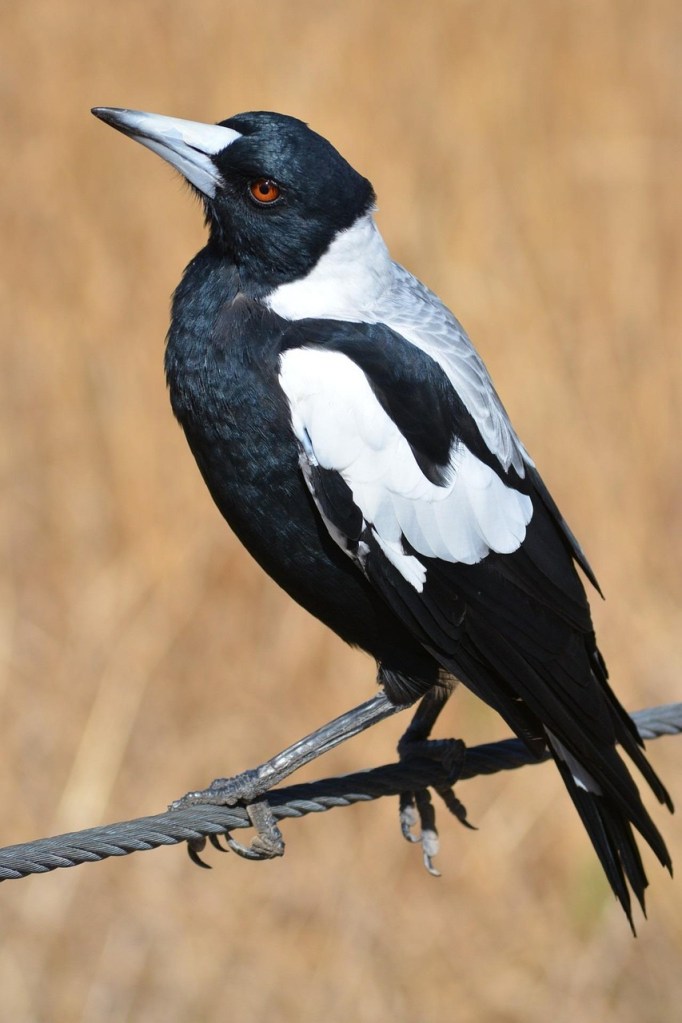
    To get to church camp, we would start driving north from Gillette in the 1987 Dodge Caravan straight into the wasteland of Montana. Piles of dust followed us like Pig Pen from Charlie Brown and I saw a lone magpie on a fencepole. One for sorrow, two for joy. Three for a girl and four for a boy. Five for silver, and six for gold. Seven for a secret never to be told. We pulled into the tiny town of Broadus, MT, where Mom took us to eat at the historic “Judges Chamber,” built in 1902. We thought it was just about the fanciest thing we had ever seen, and they served us a pasta dish with pine nuts, which tasted like the trees. This was special to us, as Mom was the one to sneak us into experiences like this.

    I stared out the window, wondering if the van was going to die here on this dirt road and if I wouldn’t get to ask my questions about God. We finally arrived, and it was church camp motif to the max. There were horses, zip lines, cabins for boys and girls, shower houses, and then the main bunkhouse with a bell. I was very eager to get my questions answered, because I had to give up my obsession with the 15,000 shot club at home, where the neighbor always managed to come out at the exact moment I was shooting hoops.

    A few days went by with the normal church camp activities, and then one evening as the birds began to roost we crowded in our room around our counselor in the middle of the bunks. I looked over to the eaves of the bunkhouse to see a single bird preening for sleep. Fluffing his feathers, tucking his bill, lifting his leg, and locking his grip. Latched on the branch, I watched him sway back and forth, finally landing still, and it was time to ask my question: “Is my brother going to heaven? But before you answer, you need to know he’s done really bad things.” She was quick to answer, “Well, did he ask God into his heart?” My brows started to furrow, and I thought about the benign process of just stating that you accept God and then change is invoked. And I thought about my brother, who I don’t think I had ever heard say “I’m sorry.” I didn’t buy it.

    I kept trying to press the issue further because it didn’t seem right, it didn’t seem valid. I was obsessed with his salvation, but it never made sense to me that he could announce God into his heart and all that he’d stolen would just reappear, all that trust undone in a single sentence. I didn’t know if there was supposed to be some penance first. I only knew I wanted my family whole again, and his antics kept ripping us apart. I wanted some kind of process where he, too, would end up at church camp with me doing his homework and telling Mom thank you for buying us pasta. And so I did what any young girl who couldn’t get her questions answered about God would do: I walked away from religion.

    Besides the unanswered questions, I also ended up breaking my foot playing basketball at camp, and that stopped my basketball dreams straightaway. I was supposed to be Division I. I was supposed to get scholarships. I was going to marry someone. I was going to get away from my family, get away from the violence. My ideas of God were always challenged the most in my own family. My dad’s beatings, my sister holding the table hostage at the Chinese restaurant, refusing anything on the menu, ordering a cheeseburger and fries and eating the fries one at a time, as slow as she could, to stay the center of it, my brother’s lies, my own addictions.

    It wasn’t until around a decade later that things fragmented. Things blew apart, and the shrapnel became images of church camp, the smell of the pews, the feel of the little clay baby Jesus I would sculpt in the afternoons. And my dad died. The event has gotten so mixed up in my brain that some years I can’t call up his face at all, only the shirts, a different color pocket tee every day, always tucked into the same pair of Wrangler jeans. He was simple and steady in a way I didn’t have language for at ten. If I let myself remember exactly how much he loved me, I’d have to feel exactly how much I lost. I aligned with him without meaning to, and I think that alignment is what kept me alive.

    I was incarcerated within months of his accidental death and learned about the boundaries of the mind. My mother had wanted me to succeed for as long as I can remember. It was only once the drugs took hold that she started to pull away, looking for a name for what she was seeing instead of the thing itself. I was still making straight A’s. I just wasn’t the same girl underneath them anymore. My uncle would always practice Buddhism in an ornamental way, and I, alone in my cell for months, came to a new understanding of how to quiet the clutter of the mind. Rid yourself of one set of shackles, slap on another. God didn’t speak loudly in that little camp cabin in Ekalaka. God didn’t speak at all. During the final game, when I felt the familiar pain start to shoot up my foot again, I ran to the locker room where no one could see me cry, and all I could think of was that bird on the branch, how it just locked its grip and went still. I didn’t know how to do that. I didn’t know how to stop anything, not the pain, not the tears, not what was coming for my foot and my whole Division I plan. Not even the birds.

    I finally went to church on the fifth year of the death day (am I to say anniversary?) and picked the Unitarian Church, and lucky for me, they had a candle-lighting ceremony. I sang the hymns, and I lit that candle. Realizing God is here amongst the atheists, the Christians, the pagans. And here we were lighting candles for the suffering of the world, our own suffering, for the suffering yet to come. My brother didn’t come as often into my mind now. I no longer cared about his salvation, I just wanted him happy enough to stop stealing. Stop hurting others. That became the running joke in the family: that I was obsessed with my brother. I was obsessed with whatever was supposed to be on the other side of it. I didn’t know what. I just wanted it.

    Now, the family is gone. My sweet Buddhist uncle passed away young at 69 in his bed of a heart attack. Now I worry about my own heart and how many beats I’ve got left. My stern father is so distant to me now that I question his love for me. I question whether anyone in that family cared, and if they only knew my obsession with getting them all to heaven, getting us back together, maybe I would matter. I knew in heaven my mom’s pain would stop, my brother would apologize, my sister would stop being so squishy, my dad and uncle would say “I love you.” The birds would sleep with us instead of disappearing into the night, dogs would never die, pasta would always have the option of pine nuts. And now when I have a question for God, I ask a machine instead, and it answers. But for today, I’m going to keep wondering where carrot seeds come from.