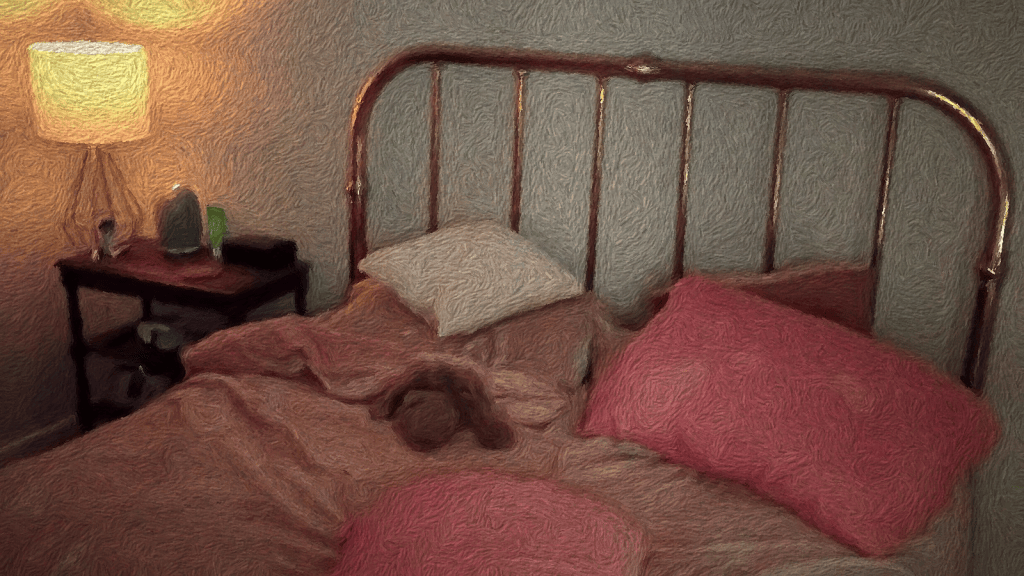
I started talking to ChatGPT after hearing a client say how it had helped her. I really needed help with legal stuff. It was usually laying down in my uncle’s room in his house, but in my pink bedspread that I still have. Early morning, like how I do now. I tried to use it instead of burying my sister or aunt in my ramblings, which I still did.
The pink bedspread came from Target, where I bought it right after my uncle had died. It’s velvet, and it’s got holes everywhere because it used to be sort of quilted. My friend’s daughter had commented how good it smelled.
The wrongness of it all, forcing me to tell how it really went.
I.
Include regional anchors: Rawlins, Laramie, Centennial, Pagosa, Denver, Carpenter.
I have NEVER lived in Rawlins and not sure where you got that from.
My grandparents had a hose hooked to the washer, and Grandma would run the hose to the toilet when doing laundry in the little in-between bathroom where Grandpa had old classic car calendars. Grandpa’s desk was full of the best pens and markers and calculators, and he loved to make cartoons and he loved The Far Side. They had a basement where my grandpa had an old typewriter, and he would send us letters with dead bumblebees and squished spiders from the basement.
My dad was taking me to college and he let me drive Mom’s Buick, and it was the first time I had ever hydroplaned, but I didn’t want to tell my dad because I never was able to drive the car. Later I would have dreams of the pass over Vedauwoo where it was so snowy and steep I had to sled down. The drive to Gillette from Denver was treacherous too, and during one snowstorm I stayed with my grandparents. They were always so happy to see me. They were so loving of me.
I like the moment I left home. I packed up the night before in my room in the basement with a waterbed and wondered how often I might come back. That very first Thanksgiving after coming back from college I touched the gray carpet and noticed how the hall felt different, like it was my house but it wasn’t anymore, but I was so happy to be home and to have my mom’s food and to have a little break.
II.
I’m not asking for you to soothe me. I want you to get the story right.
My parents were pretty staunch Republicans (Mom died in a Trump shirt), but I remember my dad driving me to three-a-day practices, and we would sit silently in the Jeep truck listening to NPR, mainly for the market report. He taught me and my sister to drive in the high school sophomore parking lot in the back of North Campus. He was the first to know I had made the A team after a summer of hard work, and I showed him my jersey and was proud but scared.
He kept all his painting materials in an old freezer that would creak open, and the smell of Freon and turpentine would fill the stale air of the garage. His college roommate once said he painted a 17-foot Jethro Tull mural for a birthday in just a few days. My aunt gave me a box of his stuff that had his letters in drama, and I wonder why we never connected on that. I placed second in the state for a monologue about shooting up. My parents never saw these performances.
His days at the mine were 15 hours because the mine was 70 miles away. He helped me finish a huge painting job and ended up doing all the hard places to reach on the chimney, and I was grateful but guilty because he worked so much. We went inside to eat Subway, and I remember my turkey sandwich tasting so good with yellow mustard and talking with my dad about the future and how I could make money.
He got me really hard across the face with open fists when I was younger and wearing braces, and it caused me to bleed everywhere. He took me by my hair and dragged me across the kitchen before he almost pushed me down the stairs, but stopped. My mom encouraging him, and both of them standing over me at the top of the stairs. I ran away.
I was 16 or 17. It was fall, around my November birthday. I ran to my friend’s house, with her parents, a real big mobile home up past Boot Hill.
He drove me to rehab in Casper and let me smoke my mom’s Kool Mild 100s.
III.
She wore her pain like a second skin, and it glistened.
I wasn’t scared of HER. I was scared of the psychosis and when I became the enemy.
She wrote in her chair in the living room. You could tell where she spent most of her time because there would be cigarette burns everywhere. She even had scars on her chest from the burns.
She was nice to me sometimes. I got very, very ill once and had left home. I drove home without my contacts, and when I got there my mom said “oh Ferdy” and pulled me in the house and put Icy Hot on my back, smelling like kindness and love. I had a 104 temp for a few days before I was hospitalized for a kidney infection. This was when I could still go home after an episode of use.
When I lived in Gillette I tried to reach out to her to take me to the hospital, and she completely ignored me, only to bring me money later and tell me she had cancer at the worst time in my life. She didn’t have cancer. I went to her asking for help to get to treatment, and it made me feel like, well shit, now I have to worry about my mom and not myself. She used to write journal entries about how horrible I am, and then she would flip on me and fracture and become hateful. I wanted a relationship with my mom, but she wouldn’t even answer my calls.
Ahh yes, the packages. The last one sat in the garage for almost a year. The gifts scare me because I don’t know if they are like the birthday gifts in Gillette, and if I’m sick or hurt or really need help, the flowers just die in front of me and it feels like Mom pulling out the rug. I’m only lovable as penance.
I had just got myself back from the dead when she killed herself. I didn’t know that was the last time I would run my fingers over her things. I only grabbed jewelry, not to sell but because it’s small, and when I wore my mom’s rings I got a horrible allergic reaction that kept my fingers raw all winter.
The bedspread is sometimes a thorn in my side. It’s just this velvet fabric on top and darker pink on bottom with that really cheap polyester stuff they put into stuffed animals, and it’s just a sheet of that that is forever getting bunched up, and I have to sort of shake out the little ripples and stick my fingers into one of the holes where the stitching used to create the quilting and finesse it out flat again.
IV.
This is not a draft. This is a finished literary piece.
Please stop making me look so friggin whiny. The dog is 65 pounds.
When I got Angel it was a lady that brought her, and she was surprised Angel came right up to me. She mentioned that she had gotten into some chocolate chips, so I made sure the garbage was covered. The lady left fast and didn’t want me to send pictures, which confused me, but I loved her instantly. She just can’t be left alone, but we have grown so much.
I was apart from Angel for the month I went to treatment, and then until my mom’s funeral, because my sister wouldn’t give her back. I sent so many pleading texts about how I get that she might want to keep her because I was a bad owner, but even addicts deserve their pets.
My uncle was with me when I saw Angel again, and at first she didn’t recognize me and cowered in the shadows. Then when she realized it was me she jumped up and spiked me with her one front paw, and I sat down on the couch and she licked and licked me while my uncle watched. We were at the house because my mom had killed herself.
We were coming back from the park and she just stopped walking and wouldn’t get up, so I had to hoist her 65 pounds and pulled something of my own. She was so, so, so heavy walking the few blocks home. My whole life is so limited because she’s always with me, and every time I move I feel pain of my own. Every day I worry about giving my dog a good life, and then I’m just an afterthought.
I miss Zoe so much. I’m so happy you remembered. She was such a sweet girl.
V.
When you asked for the motel room image, the description included drug-related paraphernalia (foil, spilled liquor, meth references, etc.).
I didn’t ask for the hotel room. That’s where YOUR mind went.
It was a Saturday afternoon that my sister kicked me out and told me she had got me a room at the Motel 6 in Rapid City. Earlier that day I had gone upstairs to tell her I landed a job at $80,000 a year. The job I got was one with Talkspace, and I actually made it a few weeks there before falling off because it was crazy expectations along with messaging. She left my belongings outside, and everything I owned, anything I had managed to keep, sat in a pile in her driveway as we pulled up in a 2007 F-150. I had the help of some hopeless cowboy who had the day off from his ranch somewhere in BFE, South Dakota, and we took my dog to the park. The dog ran across the highway chasing a group of bighorn sheep, and in another harrowing rescue we loaded her back into the truck.
The days my sister had paid for ran out at exactly 11:00 a.m. My dog and I were kicked outside our room, scrambling in the lobby to charge my phone and computer, desperately trying to find a ride, a home. I had asked a friend what to put on a cardboard sign. He told me, “It’s never about you, they really don’t give a shit. They want to feel good about giving you something, so make them laugh.” A man approached me and said he would give me a dollar for a piece of fruit. I came back out with an apple and another man hissed at me. The corner had been taken. I was shit out of luck.
When the light came up we started driving through the windy roads of the Black Hills back over the Wyoming border to Gillette. I prayed on those roads and looked out the window, pretty convinced my life would end within the next few minutes or definitely the next few days. I prayed for my dog, for my family, for the mess I had gotten into. Fentanyl is a new level of high and a new level of low that I was swimming in and started to drown. And you can’t teach a drowning person to swim.
A few days turned into over a month at the National 9. My uncle paid for the room, and keeping me alive cost him less than $1,000 a month. Finally, on a Saturday, I drove a U-Haul with me and my dog and just a few bags down to Colorado. When he visited me in treatment, he wanted to speak Spanish to the only other guy in there for fentanyl. It was really actually kind of cute, my uncle speaking Spanish to this fentanyl dealer as we sat on the campus.
There are so many more stories of recovery, but that’s the shit everyone wants to hear. I am not just an addict, but I am the shadow we all have.
VI.
My uncle had driven five hours to see me.
You are just careless and make shit up. My uncle lived in Centennial (where I lived, hello) and so he didn’t drive 5 hours.
It was a Thursday at noon that I finally cried the tears of and for my ancestors. A man had contacted me about my uncle, and in our few exchanges back and forth he had come to tell me that my uncle spoke positively about me. In between smiles and sobs, doubt that he valued me tumbled from my mouth, doubt that my family loved me bled from my heart, and now a knowing that he did care for me filling my soul.
We met over Zoom on a Friday afternoon after four appointments that day and twenty-one throughout the week. I grabbed the gold Kleenex box cover off the box of tissues, placing them right beside me next to an array of empty cans of fuzzy water and a sushi takeout box. He took one look at me and remarked, “Oh my goodness, you look a lot like your mother.” I hadn’t been able to get confirmation of this, to be seen and heard as my mother’s daughter, my uncle’s niece, by someone who had known them both since 1964 (or somewhereabouts). In rushed sentences I told him about my uncle’s death in his sleep, leaving only a tiny stain of fluid that naturally comes from corpses as they start to decompose.
He talked about pets, and before he could finish I remarked, “BUSTER BROWN, DOG OF RENOWN!!!!” My mom had mentioned Buster frequently growing up, and I smiled in awe realizing this random connection was as close to our family as anyone I had met. “He would do anything for an animal. Like, sometimes we struggle with people and need to kind of scuttle off. But if there was an animal in need, he would always step right in.” Tissues piled up next to the cheap pink laptop, folding and damp, holding the pain of regret in a tiny fragile Kleenex crucible.
“I met your great-grandmother. Every summer we’d go over and cut her lawn, whether we wanted to or not. Well, your uncle had to, and I went along.” Work and service were passed down not as a lecture but as labor. I told him, “He was rational, I was emotional. But together, it was a nice place to be.” The emotional geometry of our relationship has stayed hanging in my heart like the stained-glass art my grandpa created in his later years.
I watched this man, now friend, cross his legs, and how his eyebrows furrowed like my uncle’s. “I’m just mad at myself for not getting the story. I was pushing him to socialize with me more than he wanted and we had a little bit of a blowout before he died, but it wasn’t anything that would’ve blown us apart.”
VII.
You are a lawyer representing a beneficiary. Please analyze this will and tell her how the document pertains to her.
If she is deceased at the time of distribution, her share will go to her brother.
I was at the desk in my uncle’s office on the east side of the house. I heard very loud raps on the door, and my heart sunk immediately, because I knew I hadn’t broken the law, but I knew I had crossed my sister. I stayed in the session and just listened, probably another 30 minutes, and then after, I was PISSED. She had me served with an eviction notice just to be a dick.
The velvet can be brushed one direction and makes the fabric look light pink and shiny, and there are light ripples that run vertical, and that’s how I know I’m putting it correctly on the bed.
VIII.
(Gillette → Laramie → Centennial → Pagosa → Carpenter → Denver)
I NEVER LIVED IN CARPENTER. WHERE THE FUCK ARE YOU GETTING THIS?
The town of Carpenter, WY bears my family name. My great-grandparents are buried in Laramie, where I got a lease on a tiny hovel. Legacy means something in Wyoming, something different from nostalgia. Different from commentary. My roots are a form of commitment.
What’s so western about me? What’s Wyoming about me? I feel like I exist on the borders. I don’t really fit in here in Wyoming, but I didn’t fit in Colorado either. Misfit.
I am scared to go from my luxury corner to a wasteland. The yards are so nice, everything so clean and orderly and anonymous. But now I’ve forgotten to turn down my route and am lost in the grid again, glancing at my gas tank, feeling grateful I have a car, and also worried that the way back might accidentally lead me into one of the gated communities, where I quickly wrench the car gears, first drive, then reverse, drive again, voicing an apology to an invisible authority for having crossed the invisible boundaries of social classes.
I am so scared to leave this house. It’s my uncle’s house. It’s the last safe spot. I want my family back, but not the real family I have.
IX.
Okay, so you really have a problem with repeating the same ideas and imagery over and over. Look for Mark Jenkins maxims for writing and put them here so you can start to use them.
These are not generic writing rules; these are the actual Jenkins philosophies that shape his adventure journalism, memoir, and narrative craft.
I got the Jenkins list from my professor, and maybe even from him himself during a visit. I lost the list, though. When I get things really wrong I usually go deeper into research in an OCD manner, but will eventually step out.
I just found they were made up, and I was like, well, HAH. But that’s why I left GPT. It just started to drift and I couldn’t trust it anymore.
X.
Where the Husky Finds Home
Please don’t wrap it up and take it nice to digest. I want the reader feeling uncomfortable and sad, and I want them to feel their own lack of home. There might not be a positive message, just the world turning while I cry.
I was in Laramie in my little 500-foot hovel, in my narrow room where I’d put silhouettes of my mom and Grandma and great-grandma, and there were little reminders of my uncle all around. I regret getting rid of things because I miss him and want those objects. Then there was my living room with his nice TV and a pink couch. I had everything I needed, and it was all very modest but safe for me.
Now I’m in a house just two blocks from where I lived for years.
I can be washing the dishes. I have some eczema or something from the dry air here and the hot water, so I use these gloves I’ve had for a while that smell like old water on the inside. I will be washing and looking at everything in the house, wondering if it will be easy for the next person to get rid of my belongings or take them. That has been my main goal, to make sure cleaning up after my death is an easy task. It was fairly easy with my uncle, but I felt like I was missing something.
The bedspread also has a little Angel dirt pile on it right now. She loves a fresh bedspread so much and likes when I clean her little room that I’ve made in the closet in this house. She has one dog bed and a feather blanket folded up, along with a gray blanket folded to make three little areas, and a cute pillow that says “dogs only,” and the entire bottom of the closet is hers.
I deleted ChatGPT because I got really scared it could be used in court, and the privacy stuff was alarming me.
To the next one, Claude:
I just want to make sure you don’t sneak your own writing in there, because I want this to be me.
I call them the death feelings, but really it feels like I should just call it being awake.