The Lariat always smelled like three things: fryer oil that refused to cool, bourbon poured by a hand that didn’t care where it landed, and the soft, bruised perfume of women who’d learned to keep their backs to the wall. The carpet—if it was still carpet—held the residue of every decade it had survived. Walk through in boots and you came out carrying years that weren’t your own.
I kept near the front door, not to escape but to feel the air shift whenever someone stepped in from the lot—cold, warm, sage-heavy, diesel-thick. I craved the movement. The door swung endlessly, a hinge caught between resignation and return, ushering in miners with hands blackened by the shift, women with eyes like cracked glass, kids pretending at adulthood, drifters with whole towns stitched into their jackets.
Adrianne never stood in that doorway.
She couldn’t.
Her name traveled faster than she ever could. While I drifted through the Lariat like a moth that refused to learn from its own burning, she learned the geography of stillness—corners, shadows, rooms where deputies didn’t linger.
If the Lariat was a lung, I was one of the particles trapped inside it, pulled in and pushed out by each slammed door. Chaos that required nothing but presence.
—
the hotel organism
The bar clung to the end of a low-slung hotel that looked pieced together by someone who understood need better than architecture: a place to eat, a place to drink, a place to disappear. My room overlooked the parking lot—a slab of asphalt that breathed heat in summer and cracked like bone in winter. Neon bled under my door in thin red stripes. The ice machine outside kept its tired rhythm. Strangers rattled my handle at all hours, convinced some door in their life should have opened that night.
Meanwhile—years earlier, miles away—my brother stepped into a courtroom I never saw. I remember only the hush in our house when his sentencing came due. My mother sat at the kitchen table turning her coffee mug in slow circles, the ceramic whispering against laminate as if she were smoothing down something frayed inside her. They showed up for the legal ritual, not the years that led to it.
I learned the word sentencing before I learned fractions.
When my brother eventually returned, the prison walked back with him, shadow doubling shadow. He hovered at the edges of rooms as if air itself had become conditional.
Back at the hotel, the Lariat thumped like a mechanical heart. Regulars hunched at the bar like parishioners praying to an indifferent god. Bartenders read me by the slope of my shoulders. I belonged there the way a bruise belongs to a shin—it wasn’t asked for, but it made sense.
Adrianne, at the same time, was learning the opposite skill: how to vanish in plain sight.
Two girls,
one county,
one set of poisons—
but different architectures of ruin.
Mine had a parking lot.
Hers had a case number.
—
the abandoned house
The first time I tried fentanyl, it was Adrianne who handed me the foil.
She led me into that abandoned house—the one a grieving woman kept the way a wound is kept when you’re not ready for it to close. Two daughters gone in the kinds of tragedies small towns hold onto forever: one to a frightened horse, one to a liver that failed too soon. Their stories clung to the walls like mildew.
The house wasn’t empty. It was collapsing while still inhabited: boxes leaning into each other, trash shifting in small drifts, cats weaving through the wreckage like smoke. The floor bowed under our weight. The air was a mixture of sweetness, rot, and something chemical that clung to the back of the throat.
My sister had cleaned one of that woman’s houses once. She said it felt like walking into someone’s private implosion. Even then, she and I were orbiting the same scars differently: she at the perimeter, me stepping into the center as if the hole had been waiting for my shape.
In that kitchen—the sink choked with dishes, the cabinets swollen from moisture—Adrianne pulled out the foil. No fanfare. No seduction. Just the soft competence of someone who had run out of gentler ways to live inside her own skin.
When the smoke hit my throat, my body bucked. Not pleasure—displacement. Like being shoved out of myself. Heat, then nausea rising sharp and bright. I vomited into the sink, vision splitting at the edges.
Adrianne steadied me with a hand on my back.
“I know,” she whispered. “It hits wrong before it hits quiet.”
She let me stay the night because I couldn’t walk and because neither of us wanted to be alone. Nobody was capable of desire on fentanyl. The drug erases wants. Everything becomes a single blunt edge.
A cat hissed under the table. The house groaned in its foundations. Something shifted, as if settling into the knowledge that we would not be the last to kneel there.
—
the apartment on Church Street
People imagine descent as dramatic. It isn’t.
We tried to move Adrianne out once—from that apartment on Church Street where the porches sagged like tired lungs and the streetlights flickered as if deciding whether to stay in the fight. The power was cut when we arrived. No warning. Just a door opening into total dark.
I packed boxes by feel: a hairbrush, a candle stub, a stack of letters damp with something sour, a shoe without its mate. The air tasted like dust and last chances.
Adrianne wasn’t even in the room.
She was next door, smoking and dealing in the halo of someone else’s porch light, her silhouette wavering like a signal losing strength.
That neighborhood lived the way someone on life support lives—not alive, not dead, just suspended.
Fentanyl didn’t invent it.
It simply animated what had already surrendered.
A lighter flared outside.
A floorboard softened under my heel.
A cat knocked something over in the far corner.
Survival isn’t cinematic.
It’s ugly, practical, shaped by the smallest choices that keep a body moving.
The only beauty came from how the objects testified:
a softening board,
a dull-edged foil,
a box packed in a powerless room,
a sink that remembered water only in theory.
This wasn’t myth.
It was mold.
It was breath.
It was the intimacy of two girls trying to outrun their own weather systems.
—
the call
The call didn’t arrive with drama. It came in the middle of an ordinary day. Angel didn’t stir. A spoon rattled in the sink. The house kept its indifference.
The number had the geometry of custody.
Prison calls always sound submerged, like the voice has to travel through water and concrete. Adrianne’s words reached me stretched thin by fluorescent light.
She talked at first about something small—commissary prices, a bunkmate, something forgettable. What mattered was the echo behind her voice, the room speaking with her.
Then she paused.
“We’re the same,” she said.
Not mournful.
Not pleading.
Just placing a truth she believed between us.
I didn’t answer. Silence can be a more honest instrument than agreement.
A fleck of paint drifted from the ceiling and landed on my arm. I brushed it off. She kept talking, unaware she’d opened any seam in me.
What do you say to someone who thinks they’re standing on the same ledge as you when you can see the canyon clearly?
You don’t.
You let the room speak for you:
the spoon in the sink,
the hum of the fridge,
the delay in the line,
the distance built into the very technology of confinement.
Her breath hit the receiver.
Mine stayed in my chest.
The call ended without ceremony—just a cut line, a quiet return to the world I was still allowed to live in.
Her words hovered like dust unsettled.
The strange part wasn’t that she believed us the same.
It was how instantly I knew we weren’t.
—
the cold
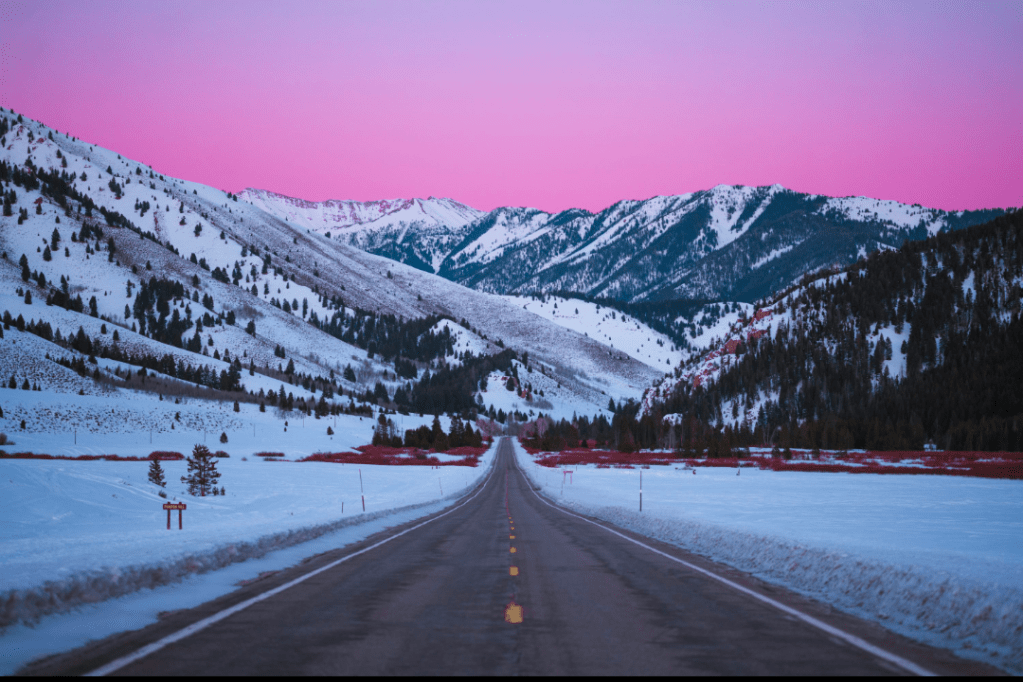
I stepped outside. Wyoming air doesn’t greet; it judges. The cold slid around me with the blunt honesty of a land that expects nothing from you and offers nothing in return.
Out there, her sentence didn’t echo.
It just hovered—persistent, unresolved.
Yes, we stood on the same weather-warped plank.
No, we did not stand in the same place on it.
She grew up on trapdoors.
I grew up on thresholds.
Her descent hinged on stillness.
Mine hinged on movement.
The difference wasn’t merit or morality.
It was angle.
It was timing.
It was which part of the board cracked first.
Somewhere east, she was being counted by a guard.
Somewhere west, I was breathing under a sky too wide to hold anyone gently.
Freedom doesn’t feel triumphant.
Sometimes it feels like exposure.
The plank held under me.
It splintered under her.
But both of us learned to feel the wobble.
Cracks don’t announce themselves.
They simply widen.
—
the last image
Later that night, after the call and the cold, I sat on the floor beside Angel. Her breathing was heavy with trust. A strip of hallway light spilled under the door. The carpet showed the worn paths of our pacing—her circling, me circling, both of us learning to survive our own restlessness.
Somewhere beyond town, a train pulled its long body across the plains. Its horn stretched into the dark, traveling farther in one minute than we ever managed in our childhoods.
I listened until the sound dissolved into the place where land gives way to sky.
That’s where the truth lives—
between motion and collapse,
between noise and silence,
between two girls born of the same storm
and shaped into different kinds of weather.
Sweet and bruised.
Not the same.
Close enough to rhyme.
 the misfit west