Tag: writing

  • hair on the wire

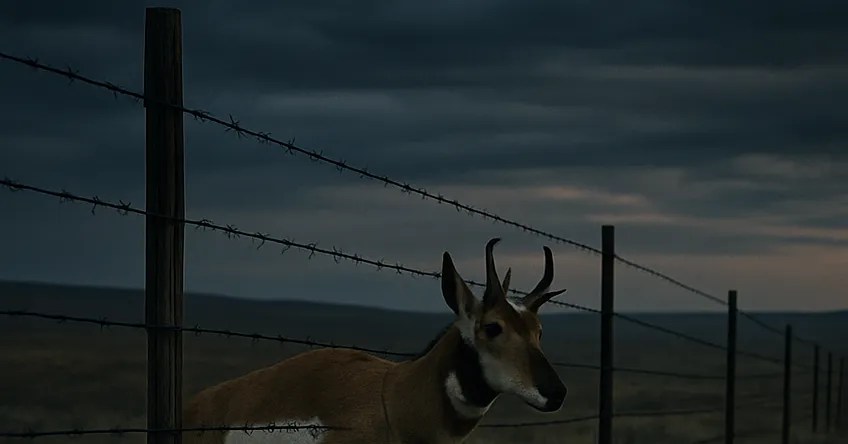
    The pronghorn were already gathering along the fence line when the wind shifted—tight, jerking movements like something had startled them miles before I ever arrived. Wyoming wind always brings news too early; it ruins surprises. It carries the scent of death the way a river carries silt: efficiently, without apology.

    I pulled over on the shoulder, gravel giving under the tires. Out on the basin, the animals held themselves in that half-lit alertness, the twilight hour where everything is both alive and almost gone. Their bodies twitched: a muscle memory from predators that don’t exist anymore. American cheetahs, long-toothed cats, those fast ghosts that evolution built them for. Creatures so fast their shadows must’ve cracked like whips across the old grasslands.

    None of those predators survived.

    The pronghorn did.

    That’s the punchline.

    Scientists say pronghorn run fifty-five miles per hour because their bodies still believe in a world that ended ten thousand years ago. A world of teeth. A world where hesitation meant blood.

    But the ghosts—oh, the ghosts stayed.

    In Wyoming, things don’t die right.

    They just hang around, changed into something else.

    The herd kept throwing glances at the fence. A senseless hesitation. You see it when you’ve lived here too long: how animals keep faith with vanished pathways. How they push their soft muzzles against barbed wire as if the wire is the mistake, not the memory.

    The lead doe stepped back, pawed the earth, lunged again.

    Stopped.

    The kind of stop that isn’t surrender—just a recalibration of desperation.

    I’d done the same thing once.

    Pressed my life against the same thin barrier over and over, thinking persistence could undo architecture.

    That was the year I loved a man who carried a gun like it was part of his circulatory system. He’d been in a band—the ghosts of predators past—which felt poetic then, like we were living inside a metaphor we’d both agreed to believe. He talked about resurrection, survival, bloodlines older than the mines. But the night he put the barrel to my face, there was no poetry. Just breath, metal, and the awful recognition that he would always move faster toward violence than he ever moved toward love.

    He’s extinct now.

    Not dead—just gone the way predators go in the American West.

    Absorbed by distance, dust, the narrative pressure of a place that eats its own history.

    But my nervous system didn’t get the memo.

    It kept running.

    That’s the trouble with ghosts:

    evolution doesn’t shake them loose just because the body survives.

    The pronghorn jerked, bolted a few feet, stopped again in that tight cluster of mistrust. Even the wind seemed to hesitate, unsure which direction to turn its face. The sky had that sickly bruise at the horizon—the color Wyoming gets before it decides whether to kill something or let it walk away.

    They say migration is instinct, but out here it looks more like compulsion. The strangest part is how these animals—the fastest in the hemisphere—get trapped by the slowest things: barbed wire stapled by a rancher who died decades ago, an interstate pouring east-west like a scar no pronghorn ever asked for, a subdivision named after the wildlife it displaced.

    Speed doesn’t save them.

    Speed betrays them.

    It lures them into running headlong into human geometry.

    I know the shape of that betrayal.

    It has the dimensions of a childhood home, of a house in Centennial with legal documents stacked like teeth, of every Wyoming hallway where silence pressed harder than fists.

    Outrun the thing too long and you lose the ability to understand what’s chasing you.

    A semi roared by and the pronghorn flinched in collective panic. One young buck tried to run toward the road—pure instinct, pure velocity—before a doe cut him off with a sharp, decisive arc, saving him by accident or old knowledge. They wheeled again, bodies moving like punctuation in a sentence written before the concept of fences.

    The fence, though, stayed.

    Fences always do.

    This is the part of Wyoming no one writes about in travel magazines: the land is haunted by its own miscalculations. We built barriers the old predators never imagined, rewrote the chase, stripped out the teeth, left only the running.

    So now everything runs.

    Animals.

    Families.

    Women with dogs in the backseat of cars heading west at dawn, hoping the next town will be the one where the ghosts finally lose interest.

    But ghosts don’t get bored here.

    They settle.

    They nest.

    They become local.

    The doe finally found a weakness in the wire—a sagging place where weather and neglect had worked together in slow conspiracy. She slipped through, ribs brushing the metal. One by one, the others followed, bodies folding and unfolding like secrets escaping through a too-small doorway. A few scraped hair from their backs, a minor blood price. Out here, every crossing requires flesh.

    I watched the last pronghorn hesitate, trembling.

    She looked directly at me—those black, ancient eyes—and for a second I felt something rare: not recognition, but mutual assessment. A kind of shared acknowledgment that neither of us were built for the world as it is.

    She went through.

    Left a tuft of hair on the barb.

    Didn’t look back.

    The herd reassembled on the far side and moved off into the sage, dissolving into the land the way Wyoming creatures do. First they’re there; then they’re legend.

    People like to claim Wyoming is empty.

    It isn’t.

    It’s crowded with absences.

    With things that should have died but didn’t, and things that should have lived but couldn’t.

    Some days I feel like one of them:

    a pronghorn built for a chase that ended before I was born,

    a woman built for a family that couldn’t hold her,

    a survivor keyed to the breath of a man who is miles gone but somehow still pacing the dark edges of my brain.

    But I’m learning something the pronghorn never will:

    Ghosts don’t need to be outrun.

    They need to be watched until they flicker, until their outlines distort, until you realize the world has shifted again and the danger you were built for is not the danger you face.

    The old predators are gone.

    We’re the ones becoming ghosts now—

    moving fast, crossing wire, dissolving into the landscape,

    carrying the memories of teeth in bodies that still haven’t learned how to slow down.

    Whether that’s tragedy or evolution, I don’t know.

    But out here, on this wind-scoured road with the last light dying, it feels like truth.

    And in Wyoming, truth is the only thing that ever stays.

  • chlorine tongue

    Some essays, some days, end up a choppy mess. My writing is on training wheels as I pull up ChatGPT on my phone and feed it memory after memory noticing the air starting to smell of bleach when the tears come. I use my thumbs to slide type memory after memory trying to Frankenstein the memories to make a life I’m proud of. I tell myself I’m writing it all down before I’m forgotten. I’m already forgotten.

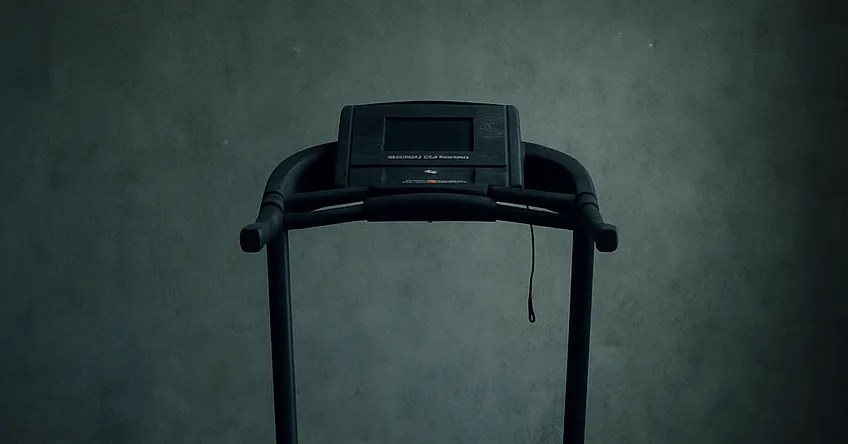
    There’s this thing called the hedonistic treadmill that we are all on. I have spent plenty of time on a treadmill used to punish and cope trying to burn fat and burn memories at the same time. I feel especially noble when I go longer than a hour because its all good mental training but I’ve got no race upcoming. Just the race to write it all down before my lung collapse, my heart bursts, my brains stop producing electricity.

    The treadmill means that despite the private chef and mountain dinner I saw you post on Facebook looking glamorous in nighttime chateaus—happiness is elusive for you, too. No matter what happens to you, or me, or anyone really, life will always crash. A fall on the treadmill. Embarrassing, shameful, but no one really cares because they weren’t watching you run on the treadmill in the first place.

    The hedonistic treadmill was never theory to me—it was the machine in the basement gym, the one that shook a little when I hit my stride. Thud thud thud. I’d throw a towel over the screen so the miles couldn’t taunt me, let the numbers sweat in the dark while I kept going. The belt always felt a hair too fast, like it knew something I didn’t. My lungs would start their small rebellion, my calves knotting themselves into warnings, but I’d stay on until the world blurred at the edges. There was a moment—always around minute forty—when the body stopped asking for mercy and just… obeyed. That strange, bleak surrender. That quiet lie that the next footfall might finally change something.

    And then there was always the slip. Not a dramatic one—just that half-second where your heel skims wrong and the belt keeps going without you. A reminder that the machine doesn’t care about your pace, your reasons, your history. It just moves. I’d steady myself, pretend it didn’t jolt me, pull the towel tighter like a blindfold. Thud thud thud. The room humming with fluorescent indifference. There was something almost honest in that moment, the way the body startles before the mind can invent a story. A brief flash of who you really are when the belt jerks and no one’s watching.

    Meanwhile, somewhere else, you were posting those mountain dinners—the candlelit plates, the chateau windows catching the dusk like they’d been engineered for it. A private chef pouring sauce in a perfect ribbon. I saw it between miles, the glow of your life cupped in my hand like something breakable. The belt kept dragging me forward while your night sat perfectly still, staged, unbothered. Thud thud thud. Sweat in my eyes. Your fork paused mid-air. Two versions of living scrolling past each other with all the intimacy of strangers on opposite treadmills—close enough to glimpse, never close enough to touch.

    What they don’t tell you about the hedonistic treadmill is how quickly the body normalizes even the beautiful things. Lottery winners go back to baseline in months; paraplegics, too—though slower, in a different key. Joy burns off like steam; pain settles in like weather. Adaptation is ruthless, almost loyal in its simplicity. I think about that when the belt finds its rhythm under me, when minute forty becomes minute forty-one and the suffering feels strangely familiar, like something the body has been rehearsing for years. The machine never gives you credit for endurance. It treats a triumph like a Tuesday. The same way your chateau dinners become ordinary to you, just another night, while I’m still caught on the treadmill’s half-life of hope—how it spikes, then dissolves, leaving only the thud thud thud of whatever comes next.

    The bleach smell comes when I’ve been crying long enough that my head feels dipped under—chlorine-thick, pool-slick, the kind of chemical sting that somehow steadies you instead of warning you away. I usually write in bed, early morning, the Laramie light still half-asleep, and the tears do what they do: burn at first, then go quiet, leaving that faint swimming-pool aura clinging to my skin. Not unpleasant. More like a reset button the body invented. I’ve bleach-stained half my wardrobe over the years trying to chase that same feeling—over-scrubbing, over-cleaning, as if the fabric might hold the clarity longer than I could. The page knows the smell by now. It rises around me the same way sweat does on the treadmill: not a sign of effort, but a sign I’ve stopped fighting it and slipped into whatever rhythm carries me forward.

    There’s always one memory that won’t bleach out, though it hasn’t even bothered to exist yet. Some future burn, some future clarity, circling like a storm that can’t make up its mind about landfall. I keep rinsing my life anyway—scrubbing the mornings in this Laramie bed, running the same miles on the same worn belt—hoping the meaning will appear in the residue. Maybe that’s the treadmill, too: not the pursuit of pleasure, but the chase for a moment that might finally explain all the others. The page smells like chlorine because I’m prepping for a memory that refuses to arrive, wiping down the present as if it might reveal the blueprint underneath. Thud thud thud in my head even when I’m not running. The sense that something is coming, or should be, or would be, if I could just keep myself clean enough to notice it.

    This house in Laramie feels like a holding tank, a place where the version of me I keep chasing might finally drift close enough to study. The walls don’t offer wisdom, but they do echo—just enough to remind me I’m not finished yet. Mornings here stretch out like runway lights, the kind meant for takeoff but repurposed for circling. I write in the bed that sags a little in the middle, listening to the wind scrape against the siding like it’s trying to sand me down to something essential. Maybe this place isn’t home so much as a pressure chamber, the altitude forcing whatever truth I’ve buried to rise, bubble by stubborn bubble. I keep waiting to hear the click—some internal latch unlocking—but mostly it’s just the low hum of a life that hasn’t decided what shape it wants to be. A holding tank. A waiting room. A treadmill with better scenery.

    But the bleach-scent mornings here in Laramie keep me honest. The tears hit, the air sharpens, and suddenly I’m awake in a way the treadmill never managed. There’s no performance in this room, no digital readout pacing my worth. Just my bed, the wind shouldering the siding, and me trying to wrench something true out of myself before the day crowds in. It feels almost surgical sometimes—this need to cut through the noise, rinse everything down to the part that still hurts, still matters. I don’t know if that’s meaning or just survival. But it’s the only place I’ve found where the burn doesn’t feel wasted.

    The chlorine smell lingers, but the room stays still, like it’s waiting for me to confess something I don’t have words for yet. My face feels raw. My shirt is ruined. The bed looks the same as it did yesterday and the day before that, but something in the air is off—tilted, chemical, bright around the edges. I stare at the ceiling until the shapes blur, the way they used to when I’d push too hard on the treadmill and the whole world would dissolve into a single, pulsing point.

    The truth is uglier than anything I’ve written:

    I’m not trying to clean a memory.

    I’m trying to create one strong enough to hold me.

    The bleach, the sweat, the thud of the belt—none of it lifts. It only digs channels through whatever I am, as if the body keeps making room for something that refuses to arrive. The writing scorches the edges, leaves a heat you can’t point to but still feel hours later.

    There’s no lesson here.

    No revelation.

    Just the quiet, chemical fact of it:

    I keep going because stopping feels like vanishing.